A trip to the dentist is a routine part of maintaining your child’s oral health. However, for families with children who face sensory challenges, getting through these visits can feel very overwhelming.
Every child deserves a comfortable dental experience with a team that understands how to meet their unique needs. This is where special needs dentistry and sedation dentistry come together to help. Let’s talk about it.
Recognizing Sensory Challenges Matters in Dentistry
Children who have sensory processing differences, often found in conditions like autism spectrum disorder, ADHD, or anxiety disorders, can be extremely sensitive to sights, sounds, smells, and sensations in the dental office—even before making it into the dentist’s chair. Bright lights and unfamiliar tools in the mouth can easily trigger discomfort or fear, making it difficult to stay calm or sit still.
With the right support, it becomes easier for these children to cooperate during treatment. Sedation dentistry doesn’t necessarily numb the behavior, but rather creates an environment that feels safe and stress-free. A space where dental care can be provided without facing a sensory overload.
What is Sedation Like for Children with Sensory Needs?
How does sedation dentistry help kids with sensory needs? There are a lot of benefits—here are a few.
Sedation dentistry enhances comfort and builds trust. Routine visits to the dentist will continue for a lifetime. Making these visits positive and comfortable can help to set the foundation for your child’s future oral health.
Sedation dentistry encourages cooperation. When kids are scared, overstimulated, or stressed, they have a hard time sitting still for treatment. This makes it difficult for the dental team to complete the procedure and often prolongs the visit. Sedation can encourage cooperation and avoid these concerns.
Sedation dentistry can reduce sensory overload. It can reduce the distress that always tends to come from sounds, lights, and unfamiliar sensations.
The Use of Sedation Dentistry
As an experienced professional dental team, we know how well sedation dentistry works for those with sensitivities. But it is not always our first choice. We will review medical history, sensory concerns, and past dental experiences to determine the safest and most effective approach. Sometimes behavior-based techniques will be used to help get your child acclimated. Other times, when traditional care is too stressful or feels unsafe, sedation is used.
For the latter, we use three main types of sedation.
Local Anesthesia
Local anesthesia is used during any dental procedure where pain may be felt, numbing the area to prevent discomfort. It is worth noting that it works well alongside other tools, too, for helping your child have a good dental experience.
Nitrous Oxide (Laughing Gas)
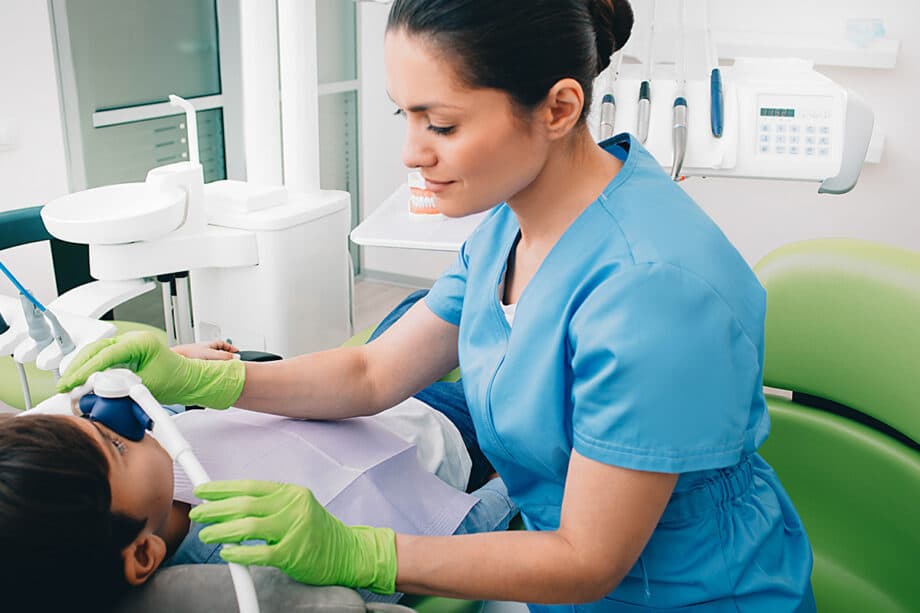
Nitrous oxide, often referred to as laughing gas, is a mild form of sedation that will help kids feel calm and relaxed while also remaining conscious and responsive. It is administered using a small mask that fits over the nose and delivers a mixture of oxygen and nitrous oxide.
Laughing gas works in a matter of minutes and wears off rapidly once the mask is removed. Kids with moderate anxiety or sensory challenges find that it can make sitting through a dental procedure much easier.
General Anesthesia and Hospital Dentistry
Children with significant sensory challenges, extensive dental needs, or certain medical conditions may require a higher level of sedation. General anesthesia may be recommended. This option allows your child to sleep through the procedure with the help of a trusted anesthesiology team. Additional safety measures are taken, and procedures are performed in a hospital setting.
With the right sedation, your child can receive necessary care while remaining secure and relaxed throughout their dental visit. An overall positive experience can have a lasting impact.
Frequently Asked Questions
Is sedation dentistry safe for children?
Yes. Strict safety protocols are followed at all times. Nitrous oxide is especially safe with minimal side effects. And general anesthesia is safe when administered by trained professionals in a controlled, hospital setting.
Can sedation be used for routine checkups and cleanings?
Sedation is not generally used for routine cleanings. However, for children who have severe anxiety or sensory challenges, nitrous oxide may be a great choice to help them stay calm and at ease during these visits.
At Suffolk Pediatric Dentistry and Orthodontics, we are committed to providing a positive dental experience for every child, including those with sensory challenges or special needs. If your child struggles with dental visits, please discuss your concerns with us so that we can take steps to provide the most comfortable experience possible. Schedule an appointment today.
