
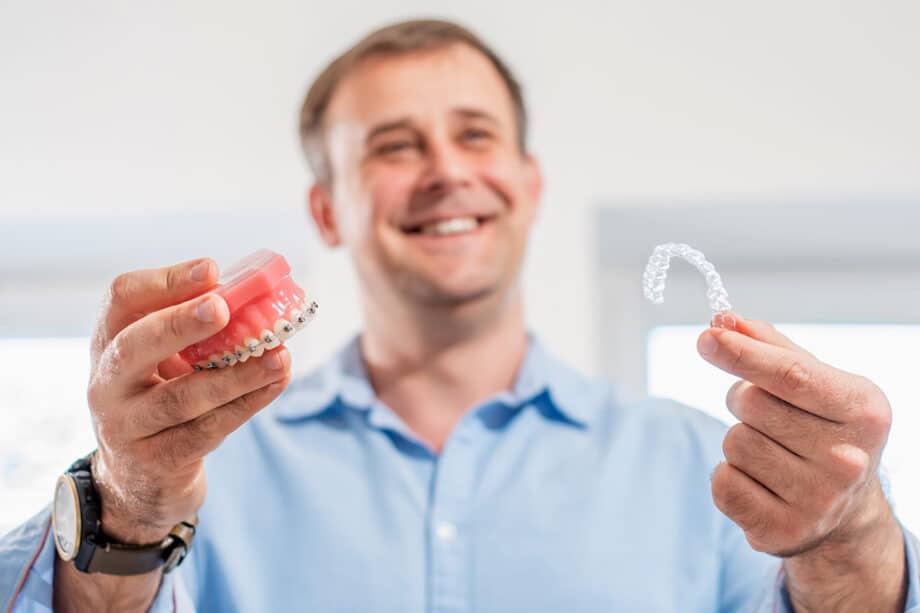
Trying to decide between Invisalign and traditional braces can be difficult, especially since they are both great options. For parents, it often comes down to a few key factors, such as your child’s age, lifestyle, orthodontic needs, and level of responsibility.
Each smile is as unique as the patient. This is why it is so important to consider all the treatment options available before making a decision. Here’s what busy families need to know.
What Exactly Is Invisalign?
Invisalign uses a series of clear, custom-made aligners that gradually shift teeth into place. The aligners are removable, making it easier for children and teens to brush and floss and enjoy their favorite foods without many dietary restrictions or changes to oral hygiene routines. When life gets busy, they won’t slow you down.
Many families appreciate the ease of Invisalign, but must consider the high level of responsibility. After all, the treatment is only effective when the aligners are in the mouth. They should be worn for at least 20 to 22 hours every single day. Not doing so can cause significant delays in treatment or cause it to fail. Invisalign aligners should only be removed for meals or snacks, as well as brushing and flossing.
A Closer Look at Traditional Braces
Traditional braces use metal brackets and wires to gradually move teeth into proper alignment. And because they are in a fixed position, they work around the clock to address orthodontic issues. Parents do not have to worry about losing aligners or non-compliance issues either. This can be beneficial for families who are always on the go.
Braces are an excellent choice for children and teens with minor, moderate, or complex dental needs. They even work well for severe crowding and bite issues.
Of course, it is worth noting that braces do require some extra care and attention. Certain foods will need to be avoided, such as those that are hard and sticky, as this can cause damage to the hardware. Brushing and flossing can also be a bit challenging at first, but this will get easier as time passes.
Factors For Busy Families to Consider
So, how do you know if Invisalign or traditional braces are a better fit for those in your family? There is no right or wrong answer since what may work well for one may not be the best option for another. Considering the following factors can help you gain a better idea of which route to take.
Age and Level of Maturity. Your child’s age and maturity will play a role in whether compliance and responsibility are likely a fit with Invisalign.
Orthodontic Need. Invisalign works well for mild to moderate treatment needs, but braces are a better option for those requiring more complex care.
Oral Hygiene. Brushing and flossing are necessary for both, but maintaining good hygiene takes some adjustments with braces. It isn’t hard, only a little challenging at first, and may take more time. This is definitely something to think about if you have busy schedules to adhere to.
Other Factors. Personal preferences regarding appearance and participation in sports or playing musical instruments are also important to think about.
While the above factors help you gauge your next steps, it is always wise to speak with your orthodontist to discuss the best option. And since transforming smiles is what we do, we can offer guidance to achieve the best results.
Frequently Asked Questions
Is Invisalign as effective as braces?
Yes. For many mild to moderate orthodontic cases, Invisalign can be just as effective as traditional braces.
At what age can children get Invisalign?
Invisalign is often appropriate for older children and teens who are responsible enough to wear their aligners as directed. We can determine if your child is a good candidate during an evaluation.
Do braces work faster than Invisalign?
Treatment time varies based on the patient’s need, but they generally progress at the same rate. However, it may be more efficient to use one over the other in certain situations.
Which is easier to clean: Invisalign or metal braces?
Invisalign aligners are removable, allowing patients to brush and floss normally and with ease. Braces require additional cleaning around the brackets and wires, making it a more time-consuming process.
Does Invisalign hurt?
A new aligner is used every couple of weeks. It may be a bit tight initially, causing some very temporary and minor discomfort.
At Suffolk Pediatric Dentistry and Orthodontics, we are committed to providing personalized orthodontic care in a welcoming, family-friendly environment. We understand that dental care is not a one-size-fits-all solution, and we can help you find the best fit for your child or teen. Contact us today to schedule an appointment.